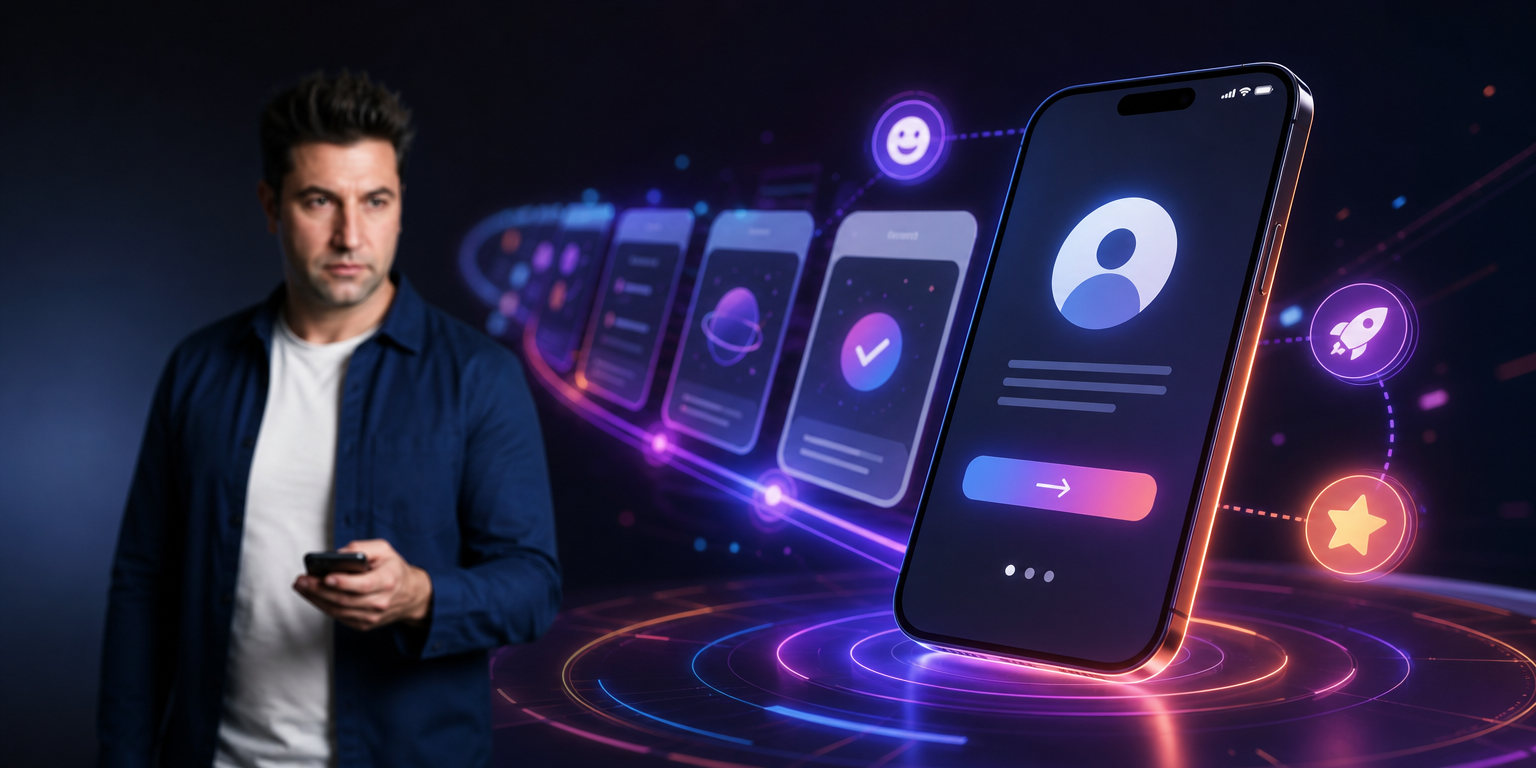
The ‘Onboarding’ Experience in Mobile Apps: Winning Over Users in the First 30 Seconds
Onboarding Experience in Mobile Apps: Winning Over the User in the First 30 Seconds
Have you ever considered the fine line between what makes a mobile app “good” and what makes it “excellent”?Often, great features get the user to download the app; However, what ensures the user’s regular daily use (retention) is often the small details that are overlooked. And the most critical of these details is the first 30 seconds when the user first encounters the application, that is, the ‘Onboarding’ experience.
In the age of AI Search, users are impatient and may abandon the application within seconds if they don’t find value in the first few seconds. For a digital startup or SaaS platform, onboarding is not just a form-filling process. It is a minimalist welcome compass that lightens the user’s cognitive load, triggers the dopamine effect, and creates muscle memory.
1. The First 30 Seconds: Expectation and Cognitive Load
From the moment the user downloads the application, a data flow begins in their brain (cognitive load). Questions such as “What does this application do?”, “Is it safe?”, “Will it solve my needs?” are instantly triggered. The onboarding experience should minimize this data overload (cognitive load) and manage expectation (prediction) in real time.
Traditional Just as we transitioned from the ‘Blue Links’ era to the AI Overviews era, you must also design a structure in onboarding that understands the user intent and extracts information as quickly as possible (extracable).
2. Frictionless Login and Guest Mode
Form fields and membership requirements are the biggest enemy of the onboarding process (friction).For a welcome that doesn’t tire the user,and speeds up decision-making processes, make guest checkout or “Continue Without Registering” (guest mode) a mandatory option.
By creating micro-interactions (shake animation, etc.) that make mistakes fun, bring a human dimension to the process and instantly reduce the cognitive load by half.
3. Focusing on the Core Value and Progressive Disclosure
Showing every function, every filter on the screen at the same time creates ‘cognitive load’. As in a minimalist e-commerce checkout page, implement the progressive disclosure principle in onboarding.
Guide the user to the problem solution (core value) as quickly as possible with a linear flow (Frictionless UX). In the future, a chatbot or artificial intelligence agent (LLM)
4. Initial Sense of Success and Muscle Memory (Dopamine Effect)
Human psychology hates uncertainty and loves the feeling of success (dopamine).A minimalist animation or a burst of confetti that appears on the screen when you complete a task (micro-interaction), leads to a small release of dopamine in the brain.
These instantaneous digital reward mechanisms, which do not tire the user, create muscle memory and prevent the user from closing the application and leaving (retention boost).These moments, add soul to the cold digital pixel piles, transforming them into living organisms.
5. Onboarding Optimized for Accessibility (WCAG 2.2) and Technical SEO (GEO)
Accessibility is not a luxury or a preference Bend down, is a constitutional right and a digital necessity.Your onboarding screens must comply with WCAG 2.2 standards (color contrast, clear visual hierarchy, etc.) and keyboard navigation.
Design your content structure using scannable (extractable), bullet points and comparison tables.In the age of GEO (Generative Engine Optimization), the HTML hierarchy (H1, H2, H3) must be flawless so that artificial intelligence agents (LLM) can understand and interpret your content.
Summary: The First 30 Seconds Are a Compass
Flexible onboarding designs you create on Figma using Auto Layout and Design Tokens on No-Code platforms, offer software developers (Dev Mode) a flawless handoff.
While big features keep the user engaged, small design details, in other words, the power of micro-interactions wins the user over. If you want to increase your app’s retention rates, make the onboarding experience as minimalist, a frictionless and instant dopamine-inducing compass as possible. Convert.